

dr hab. Monika Radlińska
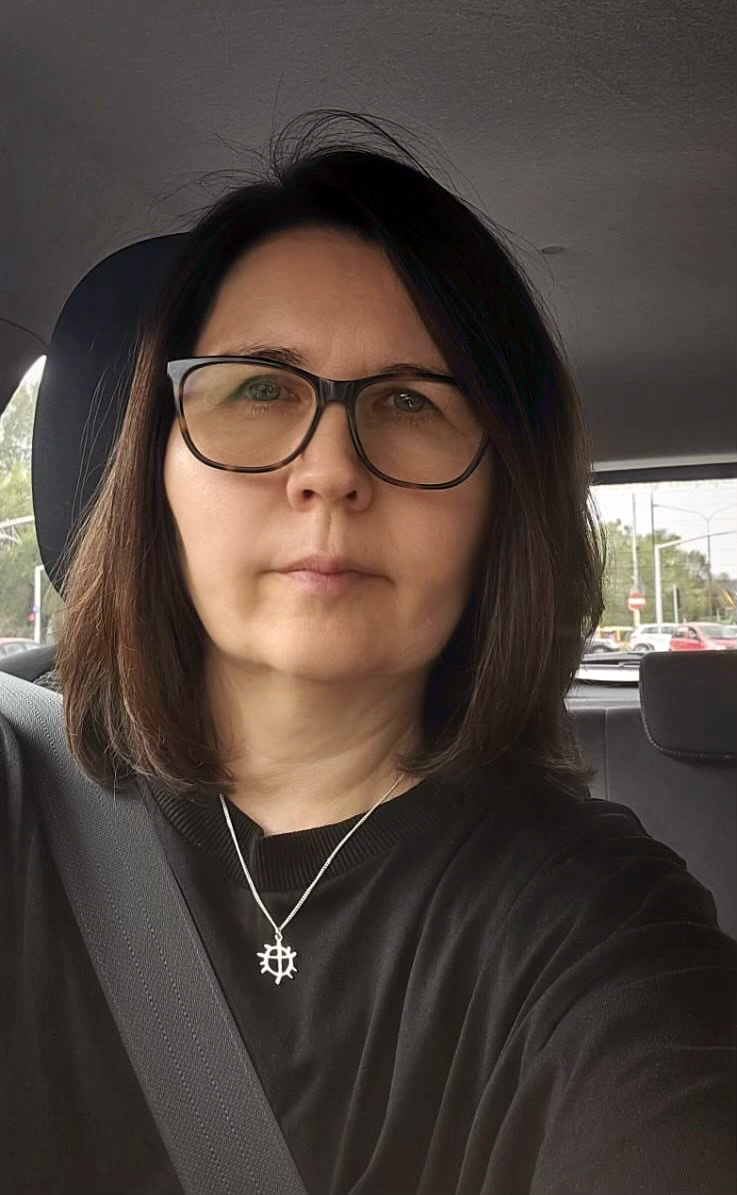
Monika Radlińska’s research interests center on bacteriophages, the most abundant biological entities on Earth, capable of infecting virtually all bacterial species. Recognizing the fundamental role of viruses in shaping microbial community dynamics and bacterial evolution, she emphasizes the importance of integrating viral diversity, virus–host interactions, and virus-mediated processes into the broader understanding of microbial ecosystem biology and biogeochemistry. Her work seeks to elucidate the interactions and co-evolution of viral and bacterial communities across diverse ecosystems, with particular focus on extreme environments. She employs both metagenomic (sequence-based) and functional (culture-based) approaches, enabling the discovery of novel environmental host–phage systems. Additionally, she analyzes (meta)genomic data to identify viral genetic modules with potential applications in biotechnology, including food safety diagnostics, therapeutics targeting antibiotic-resistant strains, DNA delivery systems, strain construction, and related technologies.
Scientific interests
- Biology of bacteria and bacteriophages
- Host-parasite (bacteria-virus) relationship
- DNA modifications
- Microbial ecology
Publications
2025
Wilczynski, Wojciech; Brzeziński, Tomasz; Nawała, Jakub; Dziedzic, Daniel; Popiel, Stanisław; Zebrowski, Marcin Lukasz; Czub, Michał; Bełdowski, Jacek; Radlinska, Monika
Chronic toxicity of triphenylarsine to Danio rerio Journal Article
In: Ecotoxicology and Environmental Safety, vol. 299, pp. 118366, 2025, ISSN: 0147-6513.
@article{WILCZYNSKI2025118366b,

title = {Chronic toxicity of triphenylarsine to Danio rerio},

author = {Wojciech Wilczynski and Tomasz Brzeziński and Jakub Nawała and Daniel Dziedzic and Stanisław Popiel and Marcin Lukasz Zebrowski and Michał Czub and Jacek Bełdowski and Monika Radlinska},

url = {https://www.sciencedirect.com/science/article/pii/S014765132500702X},

doi = {https://doi.org/10.1016/j.ecoenv.2025.118366},

issn = {0147-6513},

year  = {2025},

date = {2025-01-01},

journal = {Ecotoxicology and Environmental Safety},

volume = {299},

pages = {118366},

abstract = {Triphenylarsine (TPA) is a persistent organoarsenical that has emerged as a major environmental concern due to the extensive marine disposal of chemical munitions throughout the 20th century. The waterborne toxicity of TPA in aquatic organisms remains poorly understood, with limited and often inconclusive data, and its chronic effects are entirely unexplored. To address this gap, a 28-day exposure study was conducted, focusing on assessing the long-term toxicity of TPA in the model fish species Danio rerio. The results indicate that chronic exposure to trace concentrations of TPA significantly reduces body length, weight, and growth rate in fish. Furthermore, TPA and its primary degradation product, triphenylarsine oxide (TPAO), accumulate in the muscle tissues of fish. The accumulation rates are 0.61 μg × g⁻¹ (dry weight) for TPA and 9.1 μg × g⁻¹ (dry weight) for TPAO, for every microgram of TPA per litre of water over 28 days of exposure. Additionally, chronic exposure induced oxidative stress in the gills, as evidenced by altered mRNA expression and elevated enzymatic activity of detoxification-related proteins. Therefore, TPA exposure represents a significant threat to fish. This compound should be recognized as a high-priority environmental contaminant, and its concentrations should be routinely monitored in bottom waters, particularly near chemical munitions dumping sites. Expanding research to predict and assess the toxicity of other persistent organoarsenicals co-disposed with TPA is essential for understanding their cumulative ecological and health impacts.},

keywords = {},

pubstate = {published},

tppubtype = {article}

}
2024
Wilczynski, Wojciech; Radlinska, Monika; Zebrowski, Marcin Lukasz; Nawała, Jakub; Dziedzic, Daniel; Czub, Michał; Maszczyk, Piotr; Bełdowski, Jacek; Popiel, Stanisław; Brzeziński, Tomasz
Multi-biomarker assessment of chronic toxicity induced by the chemical warfare agent adamsite in Danio rerio Journal Article
In: Chemosphere, vol. 366, pp. 143478, 2024, ISSN: 0045-6535.
@article{WILCZYNSKI2024143478b,

title = {Multi-biomarker assessment of chronic toxicity induced by the chemical warfare agent adamsite in Danio rerio},

author = {Wojciech Wilczynski and Monika Radlinska and Marcin Lukasz Zebrowski and Jakub Nawała and Daniel Dziedzic and Michał Czub and Piotr Maszczyk and Jacek Bełdowski and Stanisław Popiel and Tomasz Brzeziński},

url = {https://www.sciencedirect.com/science/article/pii/S0045653524023786},

doi = {https://doi.org/10.1016/j.chemosphere.2024.143478},

issn = {0045-6535},

year  = {2024},

date = {2024-01-01},

journal = {Chemosphere},

volume = {366},

pages = {143478},

abstract = {Several hundred thousand tons of chemical warfare agents (CWAs) were disposed of at sea, leading to environmental contamination. Among the most toxic and persistent CWAs is adamsite; however, the ecotoxicological data on this compound is limited. Presented research focuses on the long-term effects of adamsite on fish. A 28-day exposure study was conducted, evaluating the impact of adamsite on life history parameters (body length, body mass, growth rate), tissue accumulation, and the expression/activity of detoxification-related enzymes in the model fish species, Danio rerio. Results indicate that chronic adamsite exposure significantly reduces body length, weight, and growth rate of fish at trace concentrations (0.20 and 0.25 μg × L−1). Adamsite-related compounds accumulate in fish muscle tissues, increasing by approximately 4 μg per gram (dry weight) for every microgram of adamsite per litre of water during chronic exposure. The mRNA expression and activity of detoxification-related enzymes were elevated in the gills of fish, indicating oxidative stress. This study highlights the severe chronic toxicity of adamsite, which could not be anticipated based on acute toxicity. It underscores the need for comprehensive long-term toxicity assays for CWAs and emphasizes the potential ecological and health risks posed by adamsite, necessitating more stringent risk assessments.},

keywords = {},

pubstate = {published},

tppubtype = {article}

}
2023
Decewicz, Przemyslaw; Romaniuk, Krzysztof; Gorecki, Adrian; Radlinska, Monika; Dabrowska, Maria; Wyszynska, Agnieszka; Dziewit, Lukasz
In: J Appl Genetics, vol. 64, no. 3, pp. 545–557, 2023, ISSN: 2190-3883.
@article{Decewicz2023,
title = {Structure and functions of a multireplicon genome of Antarctic Psychrobacter sp. ANT_H3: characterization of the genetic modules suitable for the construction of the plasmid-vectors for cold-active bacteria},
author = {Przemyslaw Decewicz and Krzysztof Romaniuk and Adrian Gorecki and Monika Radlinska and Maria Dabrowska and Agnieszka Wyszynska and Lukasz Dziewit},
doi = {10.1007/s13353-023-00759-7},
issn = {2190-3883},
year = {2023},
date = {2023-09-00},
journal = {J Appl Genetics},
volume = {64},
number = {3},
pages = {545--557},
publisher = {Springer Science and Business Media LLC},
abstract = {Abstract Among Psychrobacter spp., there are several multireplicon strains, carrying more than two plasmids. Psychrobacter sp. ANT_H3 carries as many as 11 extrachromosomal replicons, which is the highest number in Psychrobacter spp. Plasmids of this strain were subjected to detailed genomic analysis, which enables an insight into the structure and functioning of this multireplicon genome. The replication and conjugal transfer modules of ANT_H3 plasmids were analyzed functionally to discover their potential for being used as building blocks for the construction of novel plasmid-vectors for cold-active bacteria. It was shown that two plasmids have a narrow host range as they were not able to replicate in species other than Psychrobacter , while remaining plasmids had a wider host range and were functional in various Alpha - and Gammaproteobacteria . Moreover, it was confirmed that mobilization modules of seven plasmids were functional, i.e., could be mobilized for conjugal transfer by the RK2 conjugation system. Auxiliary genes were also distinguished in ANT_H3 plasmids, including these encoding putative DNA-protecting protein DprA, multidrug efflux SMR transporter of EmrE family, glycine cleavage system T protein, MscS small-conductance mechanosensitive channel protein, and two type II restriction-modification systems. Finally, all genome-retrieved plasmids of Psychrobacter spp. were subjected to complex genome- and proteome-based comparative analyses showing that Antarctic replicons are significantly different from plasmids from other locations. },
keywords = {},
pubstate = {published},
tppubtype = {article}
}
Wilczynski, Wojciech; Brzeziński, Tomasz; Maszczyk, Piotr; Ludew, Antoni; Czub, Michał J.; Dziedzic, Daniel; Nawala, Jakub; Popiel, Stanislaw; Beldowski, Jacek; Sanderson, Hans; Radlinska, Monika
Acute toxicity of organoarsenic chemical warfare agents to Danio rerio embryos Journal Article
In: Ecotoxicology and Environmental Safety, vol. 262, pp. 115116, 2023, ISSN: 0147-6513.
@article{WILCZYNSKI2023115116,

title = {Acute toxicity of organoarsenic chemical warfare agents to Danio rerio embryos},

author = {Wojciech Wilczynski and Tomasz Brzeziński and Piotr Maszczyk and Antoni Ludew and Michał J. Czub and Daniel Dziedzic and Jakub Nawala and Stanislaw Popiel and Jacek Beldowski and Hans Sanderson and Monika Radlinska},

url = {https://www.sciencedirect.com/science/article/pii/S0147651323006206},

doi = {https://doi.org/10.1016/j.ecoenv.2023.115116},

issn = {0147-6513},

year  = {2023},

date = {2023-01-01},

journal = {Ecotoxicology and Environmental Safety},

volume = {262},

pages = {115116},

abstract = {During the 20th century, thousands of tons of munitions containing organoarsenic chemical warfare agents (CWAs) were dumped into oceans, seas and inland waters around the world. As a result, organoarsenic CWAs continue to leak from corroding munitions into sediments and their environmental concentrations are expected to peak over the next few decades. There remains, however, a lack of knowledge about their potential toxicity to aquatic vertebrates, such as fish. The aim of this study was to fill in this gap in research, by investigating the acute toxicity of organoarsenic CWAs on fish embryos, using the model species, Danio rerio. To estimate the acute toxicity thresholds of organoarsenic CWAs (Clark I, Adamsite, PDCA), a CWA-related compound (TPA), as well as four organoarsenic CWA degradation products (Clark I[ox], Adamsite[ox], PDCA[ox], TPA[ox]), standardized tests were performed following the OECD no. 236 Fish Embryo Acute Toxicity Test guidelines. Additionally, the detoxification response in D. rerio embryos was investigated by analysing the mRNA expression of five genes encoding antioxidant enzymes (CAT, SOD, GPx, GR and GST). During the 96 h of exposure, organoarsenic CWAs induced lethal effects in D. rerio embryos at very low concentrations (classified as 1st category pollutants according to GHS categorization), and were therefore deemed to be serious environmental hazards. Although TPA and the four CWA degradation products caused no acute toxicity even at their maximum solubility, the transcription of antioxidant-related genes was altered upon exposure to these compounds, indicating the need for further testing for chronic toxicity. Incorporating the results of this study into ecological risk assessments will provide a more accurate prediction of the environmental hazards posed by CWA-related organoarsenicals.},

keywords = {},

pubstate = {published},

tppubtype = {article}

}
2022
Bujak, Katarzyna; Decewicz, Przemyslaw; Kitowicz, Michal; Radlinska, Monika
Characterization of Three Novel Virulent Aeromonas Phages Provides Insights into the Diversity of the Autographiviridae Family Journal Article
In: Viruses, vol. 14, no. 5, 2022, ISSN: 1999-4915.
@article{Bujak2022,
title = {Characterization of Three Novel Virulent Aeromonas Phages Provides Insights into the Diversity of the Autographiviridae Family},
author = {Katarzyna Bujak and Przemyslaw Decewicz and Michal Kitowicz and Monika Radlinska},
doi = {10.3390/v14051016},
issn = {1999-4915},
year = {2022},
date = {2022-05-00},
journal = {Viruses},
volume = {14},
number = {5},
publisher = {MDPI AG},
abstract = {In this study, we isolated and characterized three novel virulent Autographiviridae bacteriophages, vB_AspA_Bolek, vB_AspA_Lolek, and vB_AspA_Tola, which infect different Aeromonas strains. These three host–pathogen pairs were derived from the same sampling location—the arsenic-containing microbial mats of the Zloty Stok gold mine. Functional analysis showed they are psychrotolerant (4–25 °C), albeit with a much wider temperature range of propagation for the hosts (≤37 °C). Comparative genomic analyses revealed a high nucleotide and amino acid sequence similarity of vB_AspA_Bolek and vB_AspA_Lolek, with significant differences exclusively in the C-terminal region of their tail fibers, which might explain their host range discrimination. The protein-based phage network, together with a phylogenetic analysis of the marker proteins, allowed us to assign vB_AspA_Bolek and vB_AspA_Lolek to the Beijerinckvirinae and vB_AspA_Tola to the Colwellvirinae subfamilies, but as three novel species, due to their low nucleotide sequence coverage and identity with other known phage genomes. Global comparative analysis showed that the studied phages are also markedly different from most of the 24 Aeromonas autographiviruses known so far. Finally, this study provides in-depth insight into the diversity of the Autographiviridae phages and reveals genomic similarities between selected groups of this family as well as between autographiviruses and their relatives of other Caudoviricetes families. },
keywords = {},
pubstate = {published},
tppubtype = {article}
}
Wilczynski, Wojciech; Radlinska, Monika; Wysujack, Klaus; Czub, Michał; Brzeziński, Tomasz; Kowalczyk, Grzegorz; Bełdowski, Jacek; Nogueira, Pedro; Maszczyk, Piotr
Metagenomic Analysis of the Gastrointestinal Microbiota of Gadus morhua callarias L. Originating from a Chemical Munition Dump Site Journal Article
In: Toxics, vol. 10, no. 5, 2022, ISSN: 2305-6304.
@article{toxics10050206,

title = {Metagenomic Analysis of the Gastrointestinal Microbiota of Gadus morhua callarias L. Originating from a Chemical Munition Dump Site},

author = {Wojciech Wilczynski and Monika Radlinska and Klaus Wysujack and Michał Czub and Tomasz Brzeziński and Grzegorz Kowalczyk and Jacek Bełdowski and Pedro Nogueira and Piotr Maszczyk},

url = {https://www.mdpi.com/2305-6304/10/5/206},

doi = {10.3390/toxics10050206},

issn = {2305-6304},

year  = {2022},

date = {2022-01-01},

journal = {Toxics},

volume = {10},

number = {5},

abstract = {Several hundred thousand tonnes of munitions containing chemical warfare agents (CWAs) are lying on the seafloor worldwide. CWAs have started leaking from corroded munitions, and their presence in the environment and in organisms inhabiting dump sites has been detected. The presence of CWAs in the water negatively affects fish, macrobenthos and free-living bacteria. It can be expected that the presence of CWAs would also affect the gut-associated bacteria in fish, which are vital for their condition. The main aim of this study was to test if the microbiota of cod collected in the Baltic Bornholm Deep (highly polluted with CWAs) is dysregulated. To investigate this, we conducted metagenomic studies based on 16S rRNA gene sequencing. We found that the microbiota of cod inhabiting the dump site was significantly less taxonomically diverse compared to those from a non-polluted reference site. Moreover, taxa associated with fish diseases (e.g., Vibrionaceae, Aeromonadaceae) were more prevalent, and probiotic taxa (e.g., Actinobacteriota, Rhodobacteraceae) were less frequent in the guts of individuals from the dump site, than those from the reference site. The differences in vulnerability of various bacterial taxa inhabiting cod gastrointestinal tracts to CWAs were hypothesised to be responsible for the observed microbiota dysregulation.},

keywords = {},

pubstate = {published},

tppubtype = {article}

}
Decewicz, Przemyslaw; Kitowicz, Michal; Radlinska, Monika
Characteristics and Comparative Genomic Analysis of a Novel Virus, VarioGold, the First Bacteriophage of Variovorax Journal Article
In: International Journal of Molecular Sciences, vol. 23, no. 21, 2022, ISSN: 1422-0067.
@article{ijms232113539,

title = {Characteristics and Comparative Genomic Analysis of a Novel Virus, VarioGold, the First Bacteriophage of Variovorax},

author = {Przemyslaw Decewicz and Michal Kitowicz and Monika Radlinska},

url = {https://www.mdpi.com/1422-0067/23/21/13539},

doi = {10.3390/ijms232113539},

issn = {1422-0067},

year  = {2022},

date = {2022-01-01},

journal = {International Journal of Molecular Sciences},

volume = {23},

number = {21},

abstract = {Variovorax represents a widespread and ecologically significant genus of soil bacteria. Despite the ecological importance of these bacteria, our knowledge about the viruses infecting Variovorax spp. is quite poor. This study describes the isolation and characterization of the mitomycin-induced phage, named VarioGold. To the best of our knowledge, VarioGold represents the first characterized virus for this genus. Comparative genomic analyses suggested that VarioGold is distinct from currently known bacteriophages at both the nucleotide and protein levels; thus, it could be considered a new virus genus. In addition, another 37 prophages were distinguished in silico within the complete genomic sequences of Variovorax spp. that are available in public databases. The similarity networking analysis highlighted their general high diversity, which, despite clustering with previously described phages, shows their unique genetic load. Therefore, the novelty of Variovorax phages warrants the great enrichment of databases, which could, in turn, improve bioinformatic strategies for finding (pro)phages.},

keywords = {},

pubstate = {published},

tppubtype = {article}

}
2021
Bujak, Katarzyna; Decewicz, Przemyslaw; Rosinska, Joanna M.; Radlinska, Monika
In: International Journal of Molecular Sciences, vol. 22, no. 20, 2021, ISSN: 1422-0067.
@article{ijms222011070,

title = {Genome Study of a Novel Virulent Phage vB_SspS_KASIA and Mu-like Prophages of Shewanella sp. M16 Provides Insights into the Genetic Diversity of the Shewanella Virome},

author = {Katarzyna Bujak and Przemyslaw Decewicz and Joanna M. Rosinska and Monika Radlinska},

url = {https://www.mdpi.com/1422-0067/22/20/11070},

doi = {10.3390/ijms222011070},

issn = {1422-0067},

year  = {2021},

date = {2021-01-01},

journal = {International Journal of Molecular Sciences},

volume = {22},

number = {20},

abstract = {Shewanella is a ubiquitous bacterial genus of aquatic ecosystems, and its bacteriophages are also isolated from aquatic environments (oceans, lakes, ice, and wastewater). In this study, the isolation and characterization of a novel virulent Shewanella phage vB_SspS_KASIA and the identification of three prophages of its host, Shewanella sp. M16, including a mitomycin-inducible Mu-like siphovirus, vB_SspS_MuM16-1, became the starting point for comparative analyses of phages infecting Shewanella spp. and the determination of their position among the known bacterial viruses. A similarity networking analysis revealed the high diversity of Shewanella phages in general, with vB_SspS_KASIA clustering exclusively with Colwellia phage 9A, with which it forms a single viral cluster composed of two separate viral subclusters. Furthermore, vB_SspS_MuM16-1 presented itself as being significantly different from the phages deposited in public databases, expanding the diversity of the known Mu-like phages and giving potential molecular markers for the identification of Mu-like prophages in bacterial genomes. Moreover, the functional analysis performed for vB_SspS_KASIA suggested that, despite the KASIA host, the M16 strain grows better in a rich medium and at 30 °C the phage replication cycle seems to be optimal in restrictive culture conditions mimicking their natural environment, the Zloty Stok gold and arsenic mine.},

keywords = {},

pubstate = {published},

tppubtype = {article}

}
2020
Decewicz, Przemyslaw; Golec, Piotr; Szymczak, Mateusz; Radlinska, Monika; Dziewit, Lukasz
Identification and Characterization of the First Virulent Phages, Including a Novel Jumbo Virus, Infecting Ochrobactrum spp. Journal Article
In: International Journal of Molecular Sciences, vol. 21, no. 6, 2020, ISSN: 1422-0067.
@article{ijms21062096,

title = {Identification and Characterization of the First Virulent Phages, Including a Novel Jumbo Virus, Infecting Ochrobactrum spp.},

author = {Przemyslaw Decewicz and Piotr Golec and Mateusz Szymczak and Monika Radlinska and Lukasz Dziewit},

url = {https://www.mdpi.com/1422-0067/21/6/2096},

doi = {10.3390/ijms21062096},

issn = {1422-0067},

year  = {2020},

date = {2020-01-01},

journal = {International Journal of Molecular Sciences},

volume = {21},

number = {6},

abstract = {The Ochrobactrum genus consists of an extensive repertoire of biotechnologically valuable bacterial strains but also opportunistic pathogens. In our previous study, a novel strain, Ochrobactrum sp. POC9, which enhances biogas production in wastewater treatment plants (WWTPs) was identified and thoroughly characterized. Despite an insightful analysis of that bacterium, its susceptibility to bacteriophages present in WWTPs has not been evaluated. Using raw sewage sample from WWTP and applying the enrichment method, two virulent phages, vB_OspM_OC and vB_OspP_OH, which infect the POC9 strain, were isolated. These are the first virulent phages infecting Ochrobactrum spp. identified so far. Both phages were subjected to thorough functional and genomic analyses, which allowed classification of the vB_OspM_OC virus as a novel jumbo phage, with a genome size of over 227 kb. This phage encodes DNA methyltransferase, which mimics the specificity of cell cycle regulated CcrM methylase, a component of the epigenetic regulatory circuits in Alphaproteobacteria. In this study, an analysis of the overall diversity of Ochrobactrum-specific (pro)phages retrieved from databases and extracted in silico from bacterial genomes was also performed. Complex genome mining allowed us to build similarity networks to compare 281 Ochrobactrum-specific viruses. Analyses of the obtained networks revealed a high diversity of Ochrobactrum phages and their dissimilarity to the viruses infecting other bacteria.},

keywords = {},

pubstate = {published},

tppubtype = {article}

}
Bujak, Katarzyna; Decewicz, Przemyslaw; Kaminski, Jerzy; Radlinska, Monika
Identification, Characterization, and Genomic Analysis of Novel Serratia Temperate Phages from a Gold Mine Journal Article
In: International Journal of Molecular Sciences, vol. 21, no. 18, 2020, ISSN: 1422-0067.
@article{ijms21186709,

title = {Identification, Characterization, and Genomic Analysis of Novel Serratia Temperate Phages from a Gold Mine},

author = {Katarzyna Bujak and Przemyslaw Decewicz and Jerzy Kaminski and Monika Radlinska},

url = {https://www.mdpi.com/1422-0067/21/18/6709},

doi = {10.3390/ijms21186709},

issn = {1422-0067},

year  = {2020},

date = {2020-01-01},

journal = {International Journal of Molecular Sciences},

volume = {21},

number = {18},

abstract = {Bacteria of the genus Serratia inhabit a variety of ecological niches like water, soil, and the bodies of animals, and have a wide range of lifestyles. Currently, the complete genome sequences of 25 Serratia phages are available in the NCBI database. All of them were isolated from nutrient-rich environments like sewage, with the use of clinical Serratia strains as hosts. In this study, we identified a novel Serratia myovirus named vB_SspM_BZS1. Both the phage and its host Serratia sp. OS31 were isolated from the same oligotrophic environment, namely, an abandoned gold mine (Zloty Stok, Poland). The BZS1 phage was thoroughly characterized here in terms of its genomics, morphology, and infection kinetics. We also demonstrated that Serratia sp. OS31 was lysogenized by mitomycin-inducible siphovirus vB_SspS_OS31. Comparative analyses revealed that vB_SspM_BZS1 and vB_SspS_OS31 were remote from the known Serratia phages. Moreover, vB_SspM_BZS1 was only distantly related to other viruses. However, we discovered similar prophage sequences in genomes of various bacteria here. Additionally, a protein-based similarity network showed a high diversity of Serratia phages in general, as they were scattered across nineteen different clusters. In summary, this work broadened our knowledge on the diverse relationships of Serratia phages.},

keywords = {},

pubstate = {published},

tppubtype = {article}

}